
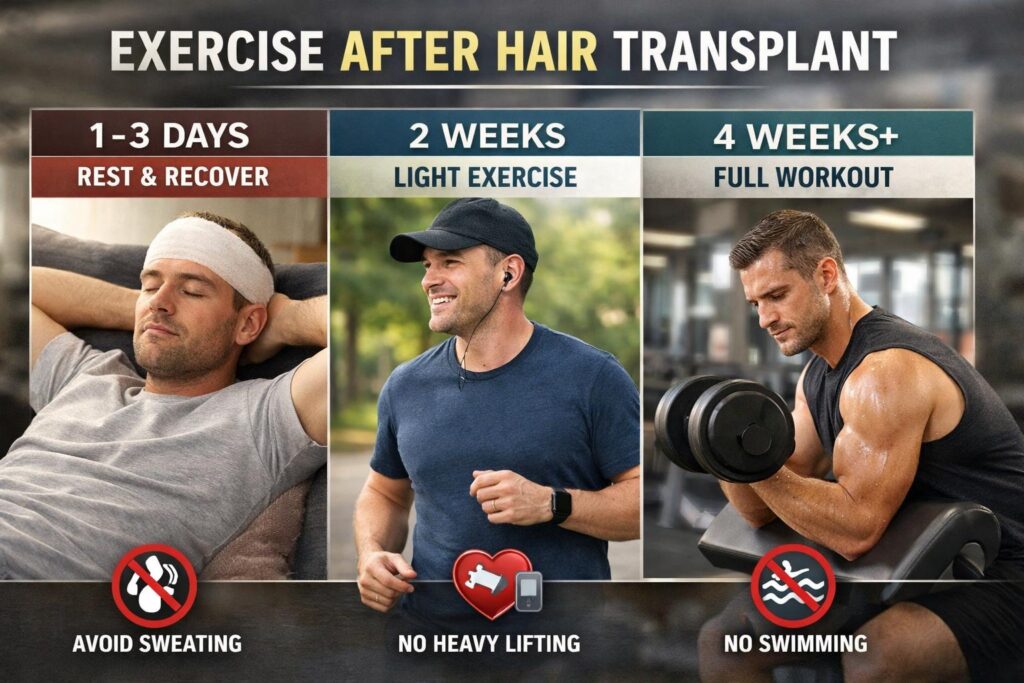
At Origin8 Aesthetics, we understand that our patients are often high-achievers who value their fitness routines as much as their appearance. After undergoing a life-changing procedure like a DHT or FUE hair transplant, it’s natural to want to get back to the gym immediately.
However, your newly transplanted follicles are in a delicate “settling” phase. Rushing back into a workout can jeopardize your results. Here is everything you need to know about exercise after hair transplant, including the safe gym timeline and essential precautions.
Pushing yourself too hard, too soon, can literally “pop” your investment right out of your scalp. Here is your definitive guide to exercise after hair transplant surgery, ensuring your grafts stay exactly where they belong.
Why Exercise Restrictions Matter After a Hair Transplant
The first 14 days post-surgery are the most critical. During this window, your hair grafts are establishing a blood supply and anchoring themselves into the scalp.
Understanding Graft Stability and Healing
For the first few days, your new hair grafts are held in place only by fibrin (a natural “glue” in your blood). It takes about 10 to 14 days for these grafts to become “permanently” anchored into the scalp. Any physical trauma, excessive scalp stretching, or internal pressure during this window can dislodge them.
Common Question: When Can I Exercise After Hair Transplant?
The short answer: Wait at least 14 days for moderate exercise and 30 days for heavy lifting. However, the timeline is graduated. You don’t go from “bed rest” to “bench press” overnight.
Why You Should Avoid Exercise Immediately After Hair Transplant
It’s not just about the physical movement; it’s about what happens inside your body when you strain.
How Sweating Affects Newly Implanted Grafts
Sweat is salty and can harbor bacteria. In the first week, your tiny incisions are essentially open micro-wounds. Sweating excessively increases the risk of infection (folliculitis) and can irritate the crusts forming around the grafts, leading to premature scabbing or itching.
Increased Blood Pressure and Risk of Bleeding
When you perform a workout after hair transplant, your heart rate climbs, and blood pressure rises. This pressure can cause the delicate donor or recipient sites to bleed, potentially “pushing” a graft out of its channel.
Impact on Hair Transplant Healing Process
The goal of the first two weeks is to minimize inflammation. Intense exercise sends blood flow away from the skin and toward the muscles, which can actually slow down the localized healing your scalp needs.
When Can I Exercise After Hair Transplant? (Timeline Guide)
First 3 Days: Strict Rest
-
- No Gym After Hair Transplant: This is the most volatile period. Stay home.
-
- Avoid Bending, Straining, or Heavy Movement: Bending over to tie your shoes or lifting a heavy grocery bag can cause a “head rush” that spikes cranial pressure. Keep your head elevated, even when sleeping.
Day 4–7: Light Movement Only
-
- Short Walks Are Allowed: A 10-minute stroll at a slow pace is fine to keep circulation moving.
-
- Avoid Sweat and Direct Sun Exposure: If you walk outside, ensure it is in the shade or during cooler hours.
Week 2: Gradual Return to Light Workout
-
- Light Cardio Without Intense Sweating: You can use a stationary bike at a very low resistance or walk on a treadmill (no incline).
-
- No Heavy Lifting or High-Intensity Workout: Your grafts are anchoring, but they aren’t “locked in” yet.
Week 3–4: Resume Moderate Exercise
-
- Controlled Workout After Hair Transplant: You can begin light weightlifting (50% of your usual max) and increase your cardio intensity.
-
- Avoid Direct Pressure on the Scalp: No headstands, no helmets, and no rubbing the area with gym towels.
After 1 Month: Return to Full Gym Routine
-
- Strength Training & Intense Cardio: You are generally cleared for your pre-surgery routine.
-
- Contact Sports Precautions: If you play soccer, basketball, or do MMA, wait 6 to 8 weeks. A stray elbow or ball to the head can still damage the maturing follicles.
Gym After Hair Transplant: What to Avoid
Even if you feel 100%, avoid these “Big Four” risks during the first month:
-
- Heavy Weightlifting: Specifically the “Valsalva maneuver” (holding your breath while straining).
-
- High-Intensity Interval Training (HIIT): The rapid spikes in heart rate are dangerous for graft stability.
-
- Swimming: Chlorine is a harsh chemical that can damage follicles, and public pools are a breeding ground for bacteria.
-
- Steam, Sauna & Excessive Sweating: Heat causes vasodilation (widening of blood vessels), which increases the risk of swelling and bleeding.
Workout After Hair Transplant: Safe Alternatives
If you’re feeling restless, stick to these low-impact options after the first week:
-
- Walking & Light Stretching: Keep your neck movements gentle.
-
- Gentle Yoga: Avoid any “inversion” poses like Downward Dog where your head is below your heart.
-
- Low-Intensity Cycling: Using a recumbent bike is safest to avoid any risk of falling.
Post Hair Transplant Precautions During Exercise
-
- Keep the Scalp Clean and Dry: If you do get a light sweat, rinse your scalp as per your surgeon’s washing instructions immediately after.
-
- Avoid Touching or Scratching Grafts: Itchiness is normal as you heal, but scratching can be fatal for the grafts.
-
- Wear Loose Headgear: If you must cover your head, use a loose-fitting adjustable cap, and only after day 10.
-
- Stay Hydrated: This supports skin elasticity and overall recovery speed.
How Exercise Affects Hair Graft Survival
Blood Circulation and Graft Stability
While good circulation is usually a positive, targeted high-pressure blood flow to the head can dislodge a graft before the skin has fully closed around it.
Risk of Dislodging Grafts
A dislodged graft is a permanent loss. Once it’s out, it cannot be “stuck back in” by the patient. Protecting them for those first 14 days is the most important thing you will do for your final result.
Common Mistakes Patients Make
-
- Returning to Gym Too Early: Thinking “it’s just a light pump” and accidentally causing a bleed.
-
- Ignoring Scalp Sensitivity: Working out when the scalp feels tight or “throbbing.”
-
- Sweating Excessively Within First 10 Days: This can lead to pimples (folliculitis) around the grafts.
Expert Tips for Faster Recovery
-
- Balanced Diet & Protein Intake: Your hair is made of protein (keratin); give your body the building blocks to heal.
-
- Adequate Rest and Sleep: Your body does its best cellular repair while you sleep.
-
- Follow-Up Appointments: Always get the “all-clear” from your clinic before resuming contact sports or heavy swimming.
Conclusion: Smart Exercise Planning Protects Your Results
A hair transplant is a marathon, not a sprint. While missing a few weeks at the gym might feel frustrating, it is a small price to pay for a lifetime of hair.
Final Advice on Exercise After Hair Transplant: Listen to your body. If your scalp starts to throb or feel tight during any activity, stop immediately. You’ve spent the money—now give yourself the time to heal properly.
Book a Consultation: Call us today at 7507959893 to assess if you are a candidate for Hair transplants.
Visit Us: We are conveniently located at Plot no 40, Ayodhya Nagar Rd, opp. Sanjuba High School, Chakradhar Nagar, Jawahar Nagar, Ayodhya nagar, Nagpur, Maharashtra 440024.
Frequently Asked Questions
Light walking after 4–5 days. Light cardio after 2 weeks. Full gym routine after 4 weeks (with surgeon approval).
In the first 10–14 days, excessive sweating may irritate grafts and increase infection risk.
Yes, but only after a proper healing timeline — usually after 3–4 weeks.
Light weights may be allowed, but avoid heavy straining.

Dr. Sohel Shrivastav is a board-certified Consultant Hair Transplant Surgeon with over 5 years of clinical experience in hair restoration and aesthetic medicine. He earned his medical degree from the NAAC-accredited Datta Meghe Institute of Medical Sciences (DMIMS), Sawangi, and completed a Fellowship in Aesthetic Medicine (FAM) from the University of Greifswald, Germany.
He has served as a Senior Hair Transplant Consultant across multiple reputed hair transplant centres in Pune, Vijayawada, and Kerala. His clinical practice focuses on evidence-based hair transplant procedures, ethical patient consultation, and long-term treatment outcomes.

