
Seeing your hair thin out after investing in a hair transplant can be a heart-stopping moment. You expect a lush mane, but suddenly, you’re seeing more scalp than before. Don’t panic, this is often a standard part of the journey.
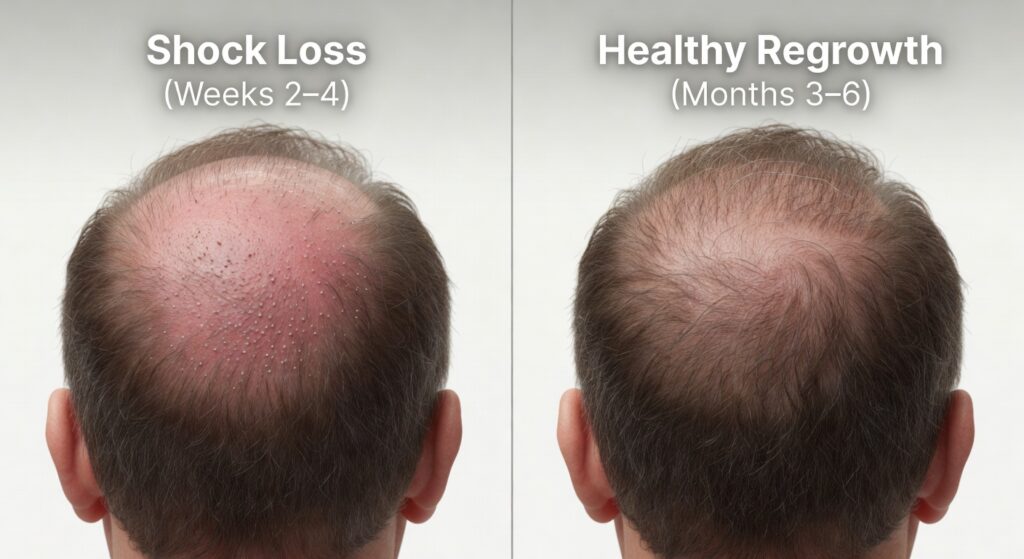
Diffuse hair loss after hair transplant, commonly known as shock loss, is a temporary shedding phase caused by surgical trauma where both transplanted and existing hair fall out before regrowing within 3–4 months.
In this guide, we’ll dive into why diffuse hair loss after hair transplant occurs, how to manage donor area thinning, and what you can expect during the recovery process.
What is Diffuse Hair Loss After Hair Transplant?
Diffuse hair loss after a hair transplant often referred to by specialists as shock loss is a common post-surgical phenomenon characterized by a widespread, generalized thinning of hair across the scalp. Unlike patterned baldness, which targets specific areas like the hairline or crown, diffuse loss makes the hair look overall less dense, sometimes revealing more of the scalp than was visible before the procedure.
Understanding Post-Transplant Hair Shedding
Diffuse hair loss refers to a generalized thinning across the scalp rather than in one specific spot. After a transplant, this usually occurs because the scalp has undergone significant surgical trauma. The hair follicles enter a resting phase simultaneously, leading to a temporary shed.
Is Diffuse Hair Loss Normal After a Hair Transplant?
Yes. In fact, nearly 85% to 95% of patients experience some form of shedding. It is a physiological response to the surgery and is rarely a sign that the transplant has failed.
Difference Between Normal Shedding and Concern
- Normal Shedding: Occurs 2–8 weeks post-op; hair shafts fall out, but the “bulb” or root stays protected under the skin.
- Concern: Sudden, patchy loss accompanied by extreme pain, pus, or loss that occurs more than 6 months after the procedure without any signs of regrowth.
What is Shock Loss?
Shock loss after hair transplant is the temporary thinning of both transplanted hairs and existing natural hairs. It happens when the surrounding follicles react to the inflammation and altered blood flow caused by the incisions.
Why Shock Loss Happens After Hair Transplant
The scalp is a sensitive ecosystem. When thousands of micro-incisions are made, the body diverts resources to healing the skin. This causes “telogen effluvium,” where hairs prematurely exit the growth phase and enter the resting phase.
How Long Does Shock Loss Last?
Typically, shock loss peaks around the one-month mark. By month three, the follicles usually “wake up” and begin producing new hair shafts.
Is Shock Loss Permanent or Temporary?
In the vast majority of cases, it is temporary. Unless the follicles were severely damaged by poor surgical technique (transection), they will grow back stronger than before.
Donor Area Thinning After Hair Transplant
Why the Donor Area Looks Thinner
The donor area (usually the back of the head) provides the grafts. It’s natural for this area to look slightly less dense initially due to the physical removal of hair and localized donor area thinning caused by surgical stress.
Overharvesting vs Natural Shedding
- Natural Shedding: A temporary thinning that resolves as surrounding hairs grow longer and “shocked” follicles recover.
- Overharvesting: A permanent mistake where too many grafts are taken, leaving the donor area looking “moth-eaten.” This is why choosing a skilled surgeon is vital.
Signs of Healthy vs Damaged Donor Area
A healthy donor area will show tiny red dots that fade into nearly invisible white scars. A damaged area may show large, irregular bald patches or persistent, painful inflammation.
Donor Area Recovery Timeline
First Week: Healing & Redness
The focus is on clot formation and wound healing. Redness and slight swelling are common as the body begins the repair process.
Weeks 2–4: Shedding & Adjustment
This is often called the “ugly duckling” phase. Donor area recovery involves the shedding of short hair shafts, and the scalp may feel itchy or tight.
Months 1–3: Early Donor Area Regrowth
The inflammation subsides. You’ll start to see stubble appearing in the donor zones as the non-extracted follicles resume their growth cycle.
Months 3–6: Visible Improvement
The hair density begins to even out. This is when donor area regrowth becomes truly noticeable to the naked eye as the hair gains length.
6+ Months: Full Recovery Expectations
By the half-year mark, the donor area should look completely natural, with enough length and density to cover the extraction sites comfortably.
Donor Area Regrowth – Will Hair Grow Back?
Natural Regrowth Cycle
It’s important to clarify: a follicle that has been physically moved to the recipient site will not grow back in the back. However, donor area regrowth refers to the surrounding “shocked” hairs returning to their normal density and filling the gaps.
Factors Affecting Donor Area Recovery
- Extraction Density: How many grafts were taken per square centimeter.
- Scalp Health: Proper blood circulation and lack of infection.
- Aftercare: Following cleaning protocols to prevent follicle-stifling scabs.
When Regrowth May Be Limited
If a patient has low hair density to begin with or if the surgeon used a large punch tool, the donor area may appear permanently thinner.
Causes of Diffuse Hair Loss After Hair Transplant
Surgical Trauma to Hair Follicles
The sheer physical impact of the procedure can trigger a collective resting phase for the scalp.
Poor Aftercare Practices
Not keeping the area clean or picking at scabs can lead to inflammation that slows down recovery.
Stress and Hormonal Changes
The body’s cortisol response to surgery and the stress of the healing process can contribute to temporary thinning.
Pre-existing Hair Loss Conditions
Conditions like Diffuse Patterned Alopecia (DPA) can make the non-transplanted hair more sensitive to the shock of surgery.
How to Prevent Donor Area Thinning
The most important factor in preventing permanent thinning is a surgeon who understands the “safe donor zone” and avoids over-extraction.
Proper Extraction Techniques
Using the correct punch size in FUE ensures that the surrounding follicles remain healthy and undamaged.
Post-Transplant Care Tips
Follow your clinic’s washing instructions to the letter and avoid strenuous exercise for the first two weeks to keep blood pressure at the scalp stable.
Treatment Options for Shock Loss & Donor Thinning
PRP Therapy for Faster Recovery
Platelet-Rich Plasma (PRP) uses your own growth factors to trigger healing and jumpstart follicles in the donor and recipient areas.
Medications (Minoxidil, Finasteride)
While Finasteride helps maintain native hair, Minoxidil can increase blood flow to the scalp to speed up the end of the shedding phase.
Low-Level Laser Therapy (LLLT)
Red light therapy reduces inflammation and boosts cellular energy (ATP) to encourage faster donor area recovery.
Nutrition and Supplements
Biotin, Zinc, and Iron play a massive role in keratin production. A healthy diet ensures your body has the building blocks for new hair.
Post Hair Transplant Care for Faster Recovery
Keep your head elevated while sleeping for the first few nights and avoid direct sunlight on the scalp for at least a month.
Washing and Scalp Care
Use a gentle, pH-balanced shampoo. Do not rub the scalp; instead, pat it gently with a soft towel or let it air dry.
Do’s and Don’ts After Surgery
- Do: Stay hydrated and take your prescribed antibiotics.
- Don’t: Wear tight hats, smoke, or consume alcohol for at least a week post-op.
When Should You Be Concerned?
If the hair hasn’t started to sprout back after 6–9 months, or if the donor area looks “see-through” even with long hair.
Infection or Complications
Watch for spreading redness, extreme heat on the scalp, or persistent drainage from the graft sites.
When to Consult Your Doctor
If you experience “burning” sensations that last longer than two weeks or sudden patchy hair loss months after the procedure.
Why Choose Origin8 Aesthetics for Hair Transplant Care?
Advanced Extraction Techniques
We use precision-guided tools to ensure that the donor area remains dense and natural-looking.
Expert Surgeons
Our team focuses on the artistry of hair restoration, ensuring that diffuse hair loss after hair transplant is minimized.
Personalized Recovery Plans
We don’t just perform the surgery; we walk with you through every month of the recovery timeline.
Conclusion: Managing Hair Loss After Hair Transplant Effectively
Experiencing diffuse hair loss after hair transplant can be stressful, but it is a well-documented phase of the healing journey. By understanding the difference between temporary shock loss and permanent damage, you can navigate your donor area recovery with confidence.
FAQs on Diffuse Hair Loss After Hair Transplant
Is donor area thinning permanent?
Generally, no. Most thinning is due to temporary shock loss. However, if too many grafts were removed, the reduction in density is permanent.
How long does shock loss last?
The shedding usually lasts a few weeks, and the regrowth begins within 3 to 4 months.
Can PRP help with donor area regrowth?
Yes, it is highly effective at reducing the “dormant” time of shocked follicles.
How to speed up donor area recovery?
Maintain a high-protein diet, avoid scalp strain, and consider LLLT or PRP treatments.

Dr. Sohel Shrivastav is a board-certified Consultant Hair Transplant Surgeon with over 5 years of clinical experience in hair restoration and aesthetic medicine. He earned his medical degree from the NAAC-accredited Datta Meghe Institute of Medical Sciences (DMIMS), Sawangi, and completed a Fellowship in Aesthetic Medicine (FAM) from the University of Greifswald, Germany.
He has served as a Senior Hair Transplant Consultant across multiple reputed hair transplant centres in Pune, Vijayawada, and Kerala. His clinical practice focuses on evidence-based hair transplant procedures, ethical patient consultation, and long-term treatment outcomes.

