
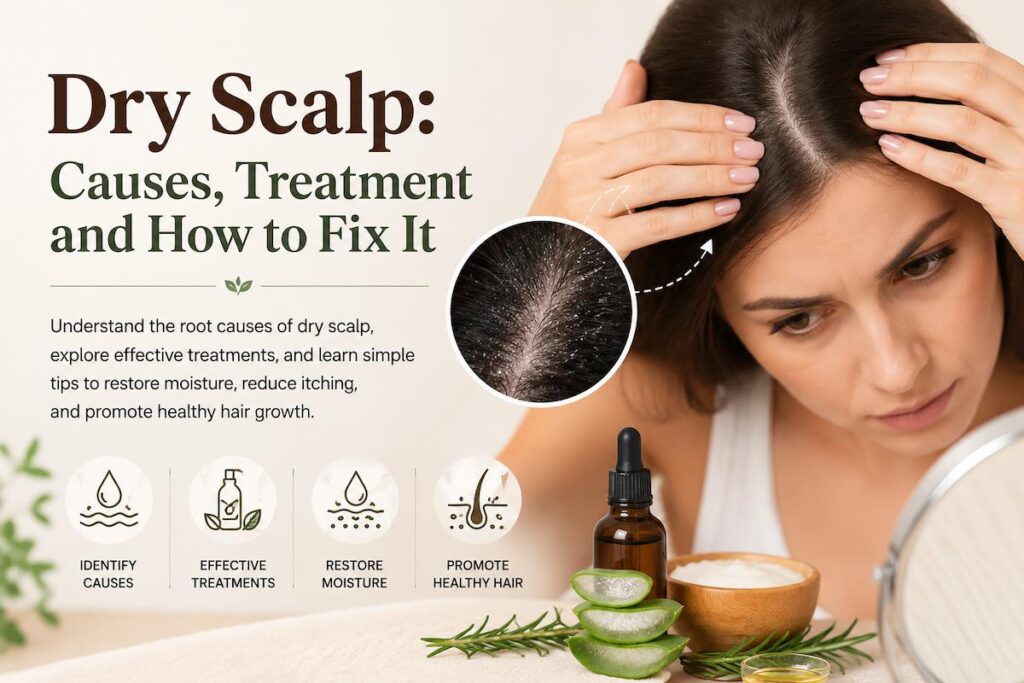
Does your scalp feel like a desert? You aren’t alone. A dry, tight, and itchy scalp is a common frustration that often peaks during seasonal changes. However, ignoring the signs doesn’t just lead to discomfort; it can actually impact your hair’s natural shine and growth.
Understanding dry scalp causes and treatment options can help prevent persistent itching, flakes, and hair-related problems before they escalate. Whether you’re dealing with a mild seasonal flake or chronic irritation, identifying the root cause is the first step toward a healthier head of hair. In this guide, we’ll break down exactly why your scalp is losing moisture and, more importantly, how to get it back.
What Causes Dry Scalp and How Can You Fix It?
Dry scalp is commonly caused by dehydration, harsh hair products, weather changes, skin conditions, or overwashing the hair. Treatment usually includes using gentle shampoos, moisturizing the scalp, avoiding irritants, and maintaining proper hydration. Identifying the root cause is important for long-term relief and healthy scalp recovery.
What Is a Dry Scalp?
At its core, a dry scalp occurs when your skin lacks sufficient moisture or its natural moisture barrier is disrupted. When this barrier fails, water evaporates too quickly, leaving the skin parched, tight, and prone to shedding.
While many people assume any flake is a sign of a chronic condition, occasional dryness is often just a reaction to environmental factors. However, if the dryness is accompanied by intense inflammation, it may point toward a more complex scalp condition.
Common Symptoms of Dry Scalp
If you aren’t sure if your scalp is truly dry, look for these tell-tale signs:
-
- Persistent Itching: A constant urge to scratch, especially after washing.
-
- White, Tiny Flakes: Small, dry particles that fall easily (unlike oily dandruff).
-
- Tightness: A “pulling” sensation on the skin of the head.
-
- Redness: Mild irritation or pinkish patches.
-
- Dry, Brittle Hair: Lack of scalp oil often leads to lack of hair luster.
Dry Scalp vs Dandruff: What’s the Difference?
-
- Dry scalp = small dry flakes
-
- Dandruff = oily yellowish flakes caused by excess oil/fungal growth
Major Dry Scalp Causes
To fix the problem, you have to find the culprit. Here are the most common reasons your scalp is struggling:
1. Cold Weather and Dry Air
Winter is notorious for “winter itch.” Low humidity levels and indoor heating strip moisture from your skin and scalp.
2. Overwashing Hair
Washing your hair every single day can strip away the essential oils (sebum) that protect your scalp, leading to a cycle of chronic dryness.
3. Harsh Hair Products
Many commercial shampoos contain sulfates (detergents) and alcohols that are far too aggressive for sensitive scalps.
4. Skin Conditions
Underlying issues like Eczema, Psoriasis, or Seborrheic Dermatitis require specific medical approaches rather than just standard moisturizing.
5. Excessive Heat Styling
Blasting your scalp with a high-heat blow dryer or using straighteners too close to the roots evaporates the scalp’s natural water content.
How to Fix Dry Scalp Naturally
1. Use a Gentle Moisturizing Shampoo
-
- Sulfate-free products
-
- Hydrating ingredients
2. Avoid Hot Water
-
- Lukewarm water protects scalp oils
3. Moisturize the Scalp Regularly
-
- Lightweight scalp oils
-
- Aloe vera gel
4. Stay Hydrated
-
- Water intake supports scalp health
5. Reduce Heat Styling
-
- Prevents moisture loss
6. Wash Hair Less Frequently
-
- Avoid stripping natural oils
7. Use a Humidifier if Needed
-
- Helpful in dry climates
Best Ingredients for Dry Scalp Treatment
When shopping for products, look for these “Gold Standard” hydrators:
-
- Aloe Vera: Soothes inflammation and provides instant cooling.
-
- Coconut Oil: Rich in fatty acids that penetrate the skin barrier.
-
- Hyaluronic Acid: A humectant that holds 1,000x its weight in water.
-
- Salicylic Acid: Useful if you have “flaky buildup” that needs to be gently exfoliated so moisture can reach the skin.
Can Dry Scalp Cause Hair Loss?
The short answer is: not directly. However, the consequences of a dry scalp can. Persistent scratching can cause physical trauma to the hair follicles, leading to temporary thinning. Furthermore, an inflamed, unhealthy scalp environment is not the ideal “soil” for hair to grow in.
Best Hair Care Routine for Dry Scalp
-
- Morning: Apply a lightweight, leave-in scalp serum if you feel tightness.
-
- Night: On “pre-wash” nights, perform a 5-minute scalp massage with coconut or argan oil.
-
- Weekly: Use a deep-conditioning scalp mask to restore the moisture barrier.
Foods That Help Improve Scalp Hydration
Omega-3 Rich Foods
-
- Fish
-
- Walnuts
-
- Flaxseeds
Hydrating Foods
-
- Cucumber
-
- Watermelon
-
- Citrus fruits
Nutrients for Scalp Health
-
- Zinc
-
- Vitamin E
-
- Biotin
Frequently Asked Questions
Dry scalp is commonly caused by lack of moisture, harsh shampoos, weather changes, or skin conditions like eczema.
Use gentle moisturizing shampoos, avoid hot water, hydrate well, and apply soothing scalp treatments like aloe vera or coconut oil.
Persistent scalp irritation and scratching may contribute to temporary hair shedding.
No, dandruff is usually linked to excess oil and fungal growth, while dry scalp occurs due to lack of moisture.
Coconut oil and argan oil are commonly used to moisturize and soothe dry scalp naturally.

Dr. Sohel Shrivastav is a board-certified Consultant Hair Transplant Surgeon with over 5 years of clinical experience in hair restoration and aesthetic medicine. He earned his medical degree from the NAAC-accredited Datta Meghe Institute of Medical Sciences (DMIMS), Sawangi, and completed a Fellowship in Aesthetic Medicine (FAM) from the University of Greifswald, Germany.
He has served as a Senior Hair Transplant Consultant across multiple reputed hair transplant centres in Pune, Vijayawada, and Kerala. His clinical practice focuses on evidence-based hair transplant procedures, ethical patient consultation, and long-term treatment outcomes.

