
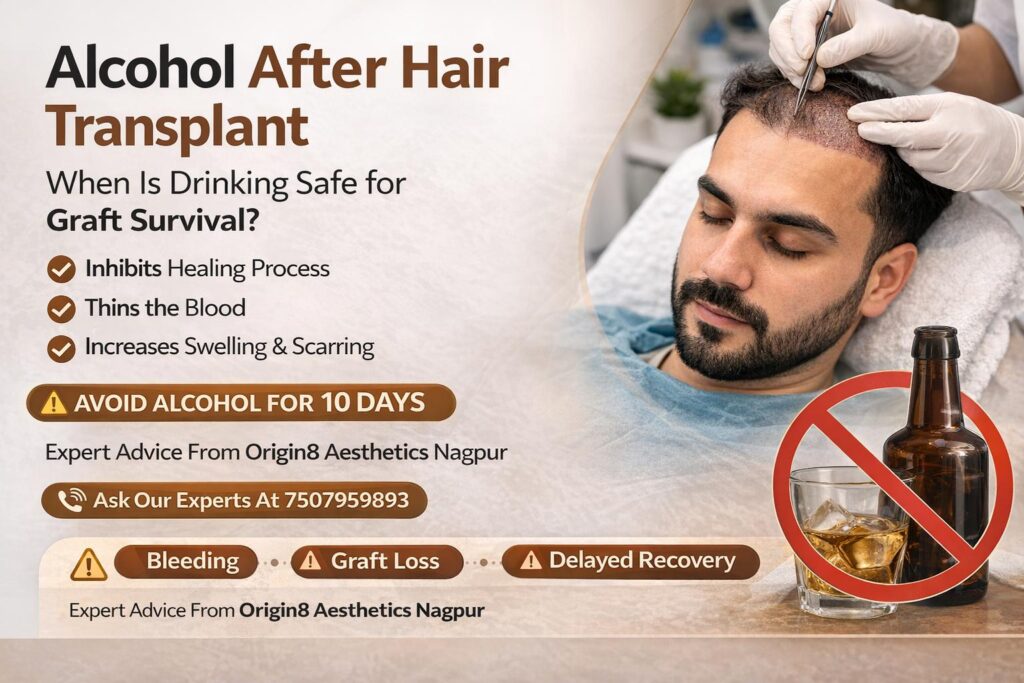
Undergoing a hair restoration procedure is a significant financial and emotional investment. You’ve spent months researching clinics and hours in the surgical chair; now, the success of your new hairline depends entirely on how you treat it during recovery.
One of the most common questions patients ask during their follow-up is: “When can I have a drink?” While a celebratory beer or glass of wine might seem harmless, understanding the relationship between alcohol after hair transplant surgery and graft survival is crucial for protecting your results.
Led by Dr. Sohel Shrivastav, to design a natural hairline using advanced DHT (Direct Hair Transplant) techniques. Now, the success of those new follicles depends on your post-operative care.
Why Post-Transplant Care Matters for Graft Survival
At Origin8 Aesthetics, we pride ourselves on a 99% success rate. However, surgery is only half the battle. The days following your procedure are critical for “graft take.” Lifestyle choices—specifically avoiding substances that interfere with blood chemistry—directly dictate how well the new follicles anchor.
The Role of Lifestyle Choices in Hair Transplant Success
At Origin8 Aesthetics, we pride ourselves on a 99% success rate. However, surgery is only half the battle. The days following your procedure are critical for “graft take.” Lifestyle choices—specifically avoiding substances that interfere with blood chemistry—directly dictate how well the new follicles anchor.
What Happens to Hair Grafts After a Transplant?
Immediately after the procedure, hair grafts are in a “vulnerable” state. They are no longer connected to a blood supply and must rely on the surrounding tissue for nutrients through a process called plasma imbibition.
-
- Understanding the First 72 Hours: This is the “danger zone.” The grafts are merely sitting in tiny incisions and have not yet formed a permanent biological bond with your scalp.
-
- How Blood Supply Affects Graft Survival: Within a few days, new microscopic blood vessels (angiogenesis) begin to link with the grafts. Anything that interferes with blood flow—like alcohol or nicotine—can cause these grafts to “starve” and fail.
Critical Hair Transplant Healing Time Explained
The hair transplant healing time isn’t just about the redness disappearing. It’s about the internal physiological stabilization of the follicles. For the first 7-10 days, your scalp is working overtime to seal incisions and prevent infection. Any disruption during this window can lead to “poor take” rates, meaning fewer hairs will actually grow.
Alcohol After Hair Transplant: Is It Safe?
The short answer is: No, not in the immediate aftermath.
Why Doctors Advise Avoiding Alcohol Initially
Surgeons typically recommend a minimum of 7 to 10 days of total abstinence from alcohol. This isn’t just a “suggestion”—it is a medical precaution to prevent complications that could ruin your surgical outcome.
How Alcohol Affects Blood Circulation and Healing
Alcohol is a potent vasodilator, meaning it causes your blood vessels to relax and widen. While this might sound like it would help blood flow, it actually creates two major issues:
-
- Increased Risk of Bleeding and Swelling: Thinner, wider vessels are more prone to “oozing.” Excessive bleeding can literally push a graft out of its site. Furthermore, alcohol increases fluid retention, leading to severe post-op forehead and eye swelling.
Does Alcohol Affect Hair Grafts After Surgery?
The short answer is: Yes, significantly. Alcohol is a potent vasodilator, meaning it causes your blood vessels to relax and widen. While this might sound like it would help blood flow, it actually creates two major issues for graft survival:
-
- Increased Risk of Bleeding and Displacement: Thinner, wider vessels are more prone to “oozing.” Excessive bleeding can literally push a graft out of its site before it has a chance to anchor.
-
- Oxygen Deprivation: Alcohol reduces the oxygen-carrying capacity of your blood. Since your new grafts are desperate for oxygen to survive the “transplant shock,” poorly oxygenated blood can lead to graft death.
-
- The Dehydration Factor: Alcohol is a diuretic. A dehydrated scalp becomes tight and dry, which hinders the skin’s ability to regenerate and can lead to more pronounced scarring.
Drinking After Hair Transplant: Safe Timeline Explained
If you are wondering about the specific window for drinking after hair transplant surgery, follow this medically-backed timeline to ensure the best results:
-
- 0–48 Hours Before Surgery: Stop all alcohol consumption. Alcohol thins the blood and can lead to excessive bleeding during the actual procedure.
-
- Days 1–7 Post-Op (Strict Abstinence): This is the most critical window. Alcohol can interfere with prescribed antibiotics and pain medications, potentially leading to adverse drug interactions or nausea.
-
- Days 7–10 (The Safe Zone): By day 10, the grafts are usually “secure” in the scalp. Most surgeons, including Dr. Sohel Shrivastav, suggest this as the earliest point to reintroduce a single, moderate drink.
-
- Full Recovery (2 Weeks+): Once the scabs have naturally fallen off and the initial healing phase is complete, you may return to your normal lifestyle habits.
Smoking and Hair Transplant Recovery
It’s impossible to discuss alcohol without mentioning smoking and hair transplant recovery.
-
- Nicotine’s Impact: While alcohol thins the blood, nicotine is a vasoconstrictor—it shrinks blood vessels.
-
- The Deadly Combo: Using both alcohol and cigarettes simultaneously creates a “push-pull” effect on your vascular system that is disastrous for graft survival. This combination significantly increases the risk of skin necrosis (tissue death).
Hair Transplant Healing Time: What to Expect
| Phase | What’s Happening | Lifestyle Rule |
| Week 1 | Grafts are anchoring; scabs forming. | No Alcohol / No Smoking. |
| Weeks 2-4 | Shedding Phase (Shock Loss) begins. | Resume light activity; alcohol in moderation. |
| Months 3-6 | New hair begins to sprout. | Normal lifestyle habits can resume. |
Best Practices for Faster Recovery
-
- Hydration: Drink 2–3 liters of water daily to flush out anesthesia.
-
- Nutrition: Focus on Vitamin C, Zinc, and Biotin to support follicle health.
-
- Activities to Avoid: Aside from drinking, avoid heavy lifting, steam rooms, and direct sun exposure for at least 2 weeks.
Tips for Faster Hair Transplant Healing
To speed up your hair transplant healing time and ensure maximum graft survival, follow these expert tips:
-
- Hydration is Key: Drink 2–3 liters of water daily. This helps flush out the local anesthesia and keeps the scalp hydrated.
-
- Sleep Elevated: Use two pillows to keep your head at a 45-degree angle for the first 3 nights. This reduces swelling, which alcohol would otherwise exacerbate.
-
- Optimize Nutrition: Focus on a diet rich in Vitamin C, Zinc, and Biotin to support follicle health.
-
- Avoid the “Itch”: As the scalp heals, it may get itchy. Do not scratch. Scratching can dislodge grafts just as easily as a bump to the head while intoxicated.
Expert Advice: Protecting Your Investment
At Origin8 Aesthetics in Nagpur, we view every transplant as a work of art. Following medical advice is the only way to ensure that your “investment” yields the lifetime of confidence you deserve
Conclusion: Final Takeaway
The impact of alcohol after hair transplant is clear: it thins the blood, increases swelling, and dehydrates the very cells trying to save your hair. By making smart choices during your hair transplant healing time, you ensure that your “new” hair is there to stay for a lifetime.
Book a Consultation: Call us today at 7507959893 to assess if you are a candidate for Hair transplants.
Visit Us: We are conveniently located at Plot no 40, Ayodhya Nagar Rd, opp. Sanjuba High School, Chakradhar Nagar, Jawahar Nagar, Ayodhya nagar, Nagpur, Maharashtra 440024.
Frequently Asked Questions (FAQs)
Most surgeons, including Dr. Sohel Shrivastav, recommend waiting at least 10 days before consuming alcohol. The first week is the most critical window for hair transplant healing time, as the grafts are still anchoring. Drinking too early can cause bleeding that may physically displace the newly placed follicles.
Yes, it can. While one drink might not ruin everything, alcohol acts as a blood thinner. If you experience excessive bleeding or localized “oozing” because of alcohol consumption, it can lead to graft death or poor density. To ensure hair transplant success, it is best to stay hydrated with water rather than alcohol during the first 72 hours.
Mixing smoking and hair transplant recovery with alcohol is a high-risk combination. While alcohol thins the blood, nicotine constricts blood vessels. This “push-pull” effect severely restricts oxygen and nutrient flow to the scalp, which is the leading cause of poor graft survival and delayed healing.
Even if you feel physically recovered, your grafts are still in a delicate biological state. Alcohol increases the risk of post-operative swelling (edema) and can interfere with the antibiotics or pain medications prescribed by your clinic. Furthermore, alcohol impairs judgment, increasing the chance of accidentally bumping or scratching your head.
Don’t panic, but stop immediately. Monitor your scalp for any unusual bleeding, increased redness, or sudden swelling. Contact Origin8 Aesthetics at 7507959893 if you notice any grafts popping out or if the swelling becomes severe.

Dr. Sohel Shrivastav is a board-certified Consultant Hair Transplant Surgeon with over 5 years of clinical experience in hair restoration and aesthetic medicine. He earned his medical degree from the NAAC-accredited Datta Meghe Institute of Medical Sciences (DMIMS), Sawangi, and completed a Fellowship in Aesthetic Medicine (FAM) from the University of Greifswald, Germany.
He has served as a Senior Hair Transplant Consultant across multiple reputed hair transplant centres in Pune, Vijayawada, and Kerala. His clinical practice focuses on evidence-based hair transplant procedures, ethical patient consultation, and long-term treatment outcomes.

