
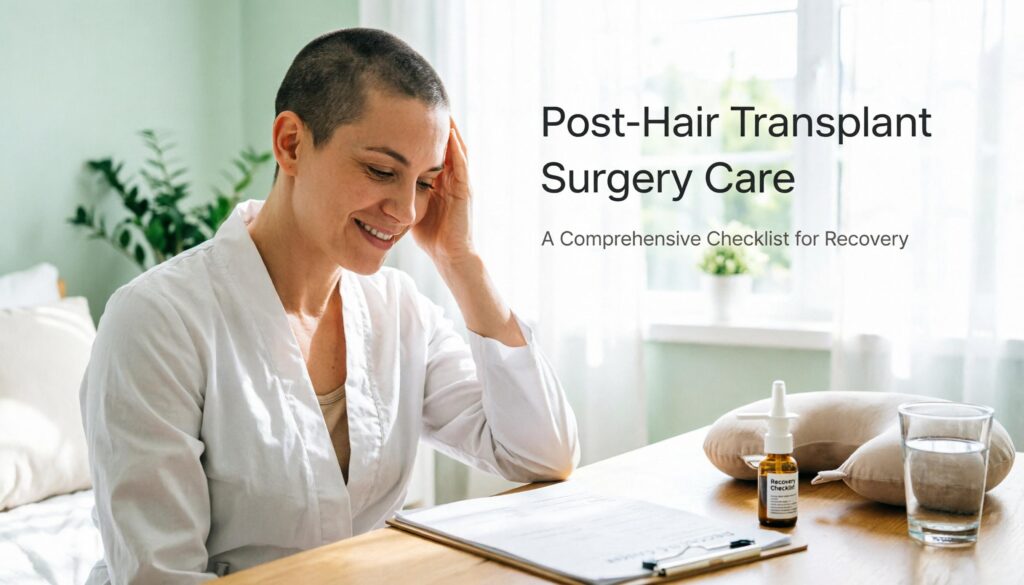
Post hair transplant care involves protecting grafts, following proper washing techniques, avoiding physical strain, and maintaining scalp hygiene for the first 10–14 days to ensure successful hair growth
So, you’ve finally taken the plunge and invested in your hairline. Congratulations! However, the surgery itself is only half the battle. The real magic happens during the recovery phase. Proper post hair transplant care acts as the essential bridge between a successful procedure and a lifetime of natural-looking, high-density growth.
Why Post Hair Transplant Care is Crucial for Results
Think of your newly implanted grafts like delicate seedlings. If you plant them and immediately neglect their environment, they may fail to take root. Hair transplant aftercare instructions are scientifically designed to protect your investment and ensure those follicles receive the blood flow and protection they need to thrive.
How Aftercare Impacts Hair Growth Success
The first 72 hours are the most critical window for “graft anchoring.” During this time, the tiny incisions begin to close and the blood supply starts reconnecting to the transplanted follicles. Any physical trauma, friction, or infection during this stage can lead to graft loss, directly impacting your final density.
Common Mistakes That Affect Recovery
- Subconscious Scratching: Itching is a natural byproduct of healing, but picking at scabs can physically pull the bulb of the graft out of the scalp.
- Improper Sleeping Positions: Sleeping flat or on your side too early leads to gravity-induced swelling (edema) that can shift toward the eyes and forehead.
- Premature Sun Exposure: UV rays can damage the sensitive, healing tissue and cause permanent hyperpigmentation.
Hair Transplant Recovery Checklist (Day-by-Day Guide)
Healing isn’t a linear sprint; it’s a strategic marathon. Use this hair transplant recovery checklist to monitor your progress and stay on track.
| Timeline | What to Expect | Key Action |
| First 24 Hours | Minimal oozing, numbness, and tightness in the donor area. | Absolute rest; keep the head elevated at all times. |
| Days 2–5 | Swelling usually peaks around the forehead or bridge of the nose. | Continue elevation; start using a saline spray every 2 hours. |
| Days 6–10 | Scabs begin to harden and may feel tight or itchy. | Begin the first “soaking” washes to gently soften crusts. |
| Weeks 2–4 | “Shock loss” begins; transplanted shafts fall out (this is normal). | Stay patient; the follicle “root” is safe beneath the skin. |
| Months 1–3 | The “resting” phase; the scalp looks much like it did pre-surgery. | Focus on scalp health and nutrition; avoid harsh chemicals. |
| Months 4–6 | New, fine hairs (vellus hairs) start breaking through the surface. | Maintain your routine; density will increase month by month. |
| Months 6–12 | Hair matures, thickens, and takes on its final texture. | Evaluate your final results and enjoy your new look. |
Hair Transplant Aftercare Instructions You Must Follow
How to Sleep After Hair Transplant
For the first 7 to 10 days, you must sleep with your head elevated at a 45-degree angle. Using a travel pillow (U-shaped) is highly recommended; it locks your neck in place to prevent your head from rolling over and rubbing the delicate grafts against the pillowcase.
Washing Your Hair Safely
Avoid high-pressure shower heads for at least 10 days.
- The Soak: Use a clean cup to gently pour lukewarm water over the grafts.
- The Lather: Mix a pH-neutral shampoo with water in a cup to create foam. Gently “pat” the foam onto the area—never rub.
- The Rinse: Pour water slowly to remove the soap. Let it air dry; do not use a towel.
Medications and Topical Treatments
Strictly follow the antibiotic course provided by your surgeon to prevent infection. You may also be prescribed anti-inflammatory meds for swelling and specialized lotions to soften the scabs in the donor area.
When to Resume Daily Activities
Light walking and office work can usually resume after 3 to 4 days. However, any activity that significantly raises your heart rate or blood pressure should be avoided for 14 days to prevent bleeding at the graft sites.
FUE Aftercare Tips for Faster Healing
Follicular Unit Extraction (FUE) is minimally invasive, but the hundreds of tiny extraction points in the donor area require specific FUE aftercare tips to ensure rapid healing without scarring.
Special Care for Donor Area
The back and sides of your head may feel “prickly” or sore. Keep this area hydrated with the recommended ointments to prevent heavy crusting, which can lead to discomfort and slower healing.
Avoiding Damage to Implanted Grafts
The most common cause of graft failure is accidental friction. Avoid wearing tight beanies, baseball caps, or motorcycle helmets for the first two weeks. If you must cover your head, use a very loose-fitting surgical cap or a structured hood.
Do’s and Don’ts After FUE Hair Transplant
- Do use your saline spray religiously to keep the environment sterile and moist.
- Don’t use a hair dryer on the “heat” setting for at least 3 weeks; it can dehydrate the grafts.
- Don’t drink alcohol for 48 hours post-op, as it thins the blood and increases the risk of bleeding.
Hair Transplant Healing Stages Explained
Managing your expectations is easier when you understand the four main hair transplant healing stages.
Immediate Post-Surgery Phase
This is the “redness” phase. Your scalp will show small red dots at both the extraction and implantation sites. This is perfectly normal and begins to fade within the first week.
Scabbing and Crust Formation
As the tiny incisions heal, scabs will form. These are essentially nature’s bandages, protecting the grafts from external bacteria. They typically naturally shed between day 10 and day 14.
Shedding (Shock Loss) Phase
Often the most stressful phase for patients, “shock loss” is the temporary shedding of the hair shafts. This is a sign that the follicle is entering the telogen (resting) phase before it begins its permanent growth cycle.
Regrowth and Thickening Phase
Starting around month 3 or 4, you will see the first signs of permanent growth. These hairs will initially be fine and light but will thicken and gain pigment throughout the first year.
What to Avoid After Hair Transplant Surgery
Physical Activities & Exercise Restrictions
Exercise after hair transplant Avoid heavy lifting, gym sessions, and contact sports for at least 14 days. Straining causes a “pressure” spike in the scalp that can physically push a graft out of its socket.
Sun Exposure and Sweating
Excessive sweat can clog pores and lead to folliculitis (inflammation of the hair follicles). Direct sun exposure on a healing scalp can cause permanent redness or “sun spots.” Use an umbrella or a loose hat when outdoors.
Smoking and Alcohol
Smoking and Alcohol after hair transplant is a vasoconstrictor, meaning it narrows blood vessels and reduces the oxygen levels reaching your scalp. This significantly hinders the survival rate of the new grafts. Avoid smoking for at least 2 weeks.
Hair Styling Products & Tools
Gels, waxes, and especially chemical hair dyes are strictly prohibited for the first 4 to 6 weeks. The harsh chemicals can cause an inflammatory reaction on the still-sensitive scalp.
Diet and Lifestyle Tips for Better Hair Growth
Nutrients That Boost Hair Recovery
Your body requires extra resources for tissue repair. Increase your intake of Zinc (found in nuts and seeds), Iron (leafy greens), and Vitamin C (citrus fruits) to facilitate faster collagen production.
Hydration and Sleep Importance
A hydrated scalp heals faster and is less prone to the intense itching associated with dryness. Aim for 8 hours of sleep, as the body does its most significant cellular repair during the deep sleep cycles.
Supplements Recommended by Doctors
Many experts recommend Biotin or specialized hair vitamins like Nutrafol to provide the building blocks necessary for the new follicles to produce thick, healthy hair shafts.
Signs of Healthy Recovery vs Warning Signs
Normal Symptoms After Hair Transplant
It is normal to experience mild forehead swelling, temporary numbness in the donor area, and a pinkish hue on the scalp for several weeks.
When to Contact Your Doctor
You should call your clinic if you experience:
- Fever or chills (signs of infection).
- Pus-like discharge from the graft sites.
- Pain that increases over time rather than decreasing.
- Significant bleeding that doesn’t stop with gentle pressure.
Hair Washing Routine After Transplant (Step-by-Step)
When to Start Washing
Most surgeons recommend the first wash occur 48 hours after surgery. This wash is often performed at the clinic for the first time.
Gentle Shampoo Techniques
Apply the shampoo foam using a “dabbing” motion with your fingertips. Never use your nails. Let the suds sit for 2-3 minutes to break down any dried blood before rinsing with a low-pressure cup of water.
Drying Your Hair Safely
Patting the area with a high-quality paper towel is safer than using a cloth towel, as paper towels don’t have loops that can snag the grafts. Always air dry when possible.
Long-Term Maintenance After Hair Transplant
PRP Therapy for Better Results
Platelet-Rich Plasma (PRP) therapy involves using your own blood’s growth factors to stimulate the scalp. It is often recommended 1 month after surgery to accelerate growth and increase hair diameter.
Medications Like Minoxidil & Finasteride
While the transplanted hair is genetically resistant to balding, your existing hair is not. Continuing or starting these medications helps maintain the overall density of your hair for years to come.
Follow-Up Sessions
Standard check-ups occur at the 1, 3, 6, and 12-month marks. These allow the surgeon to ensure the direction and density of growth are meeting the surgical plan.
Expert Surgeons & Advanced Techniques
We specialize in ultra-refined FUE techniques that prioritize both a natural-looking hairline and a healthy, high-density donor area.
Personalized Aftercare Support
Every patient receives a customized recovery kit and direct access to our support team. We walk with you through every stage—from the first wash to the final result.
Proven Results & Patient Satisfaction
Our track record is built on the success of patients who have followed our meticulous aftercare protocols to achieve life-changing transformations.
Conclusion: Your Complete Hair Transplant Recovery Plan
A hair transplant is a permanent solution, but its success depends on your dedication during these first few weeks. By following this comprehensive post hair transplant care guide staying hydrated, protecting your grafts from friction, and being patient through the shedding phase you are setting yourself up for the best possible version of your new hair.
FAQs on Post Hair Transplant Care
How long does hair transplant recovery take?
The visible scabbing is gone in 10-14 days. However, the internal biological recovery and full growth cycle take a full 12 months to complete.
When can I wear a cap or helmet?
A loose cap is safe after 10 days. For tight-fitting sports or motorcycle helmets, wait at least 4 to 6 weeks to avoid compressing the grafts.
Is itching normal after a hair transplant?
Yes, it is a sign of healing and nerve regeneration. If the itching is unbearable, your doctor may prescribe an antihistamine or a specialized spray.
When will transplanted hair start growing?
Expect the first signs of growth between 3 and 4 months. The most dramatic change in density usually occurs between months 6 and 9.
Why Choose Origin8 Aesthetics for Hair Transplant Care?
At Origin8 Aesthetics, we believe that the procedure is only the beginning of your transformation. Our commitment to your results extends through every stage of your recovery.

Dr. Sohel Shrivastav is a board-certified Consultant Hair Transplant Surgeon with over 5 years of clinical experience in hair restoration and aesthetic medicine. He earned his medical degree from the NAAC-accredited Datta Meghe Institute of Medical Sciences (DMIMS), Sawangi, and completed a Fellowship in Aesthetic Medicine (FAM) from the University of Greifswald, Germany.
He has served as a Senior Hair Transplant Consultant across multiple reputed hair transplant centres in Pune, Vijayawada, and Kerala. His clinical practice focuses on evidence-based hair transplant procedures, ethical patient consultation, and long-term treatment outcomes.

